
Guides · CombiSteel Knowledge Hub
Troubleshooting Bottlenecks in CombiSteel Cooking Lines (Hobs, Fryers and Griddles)
Identify and resolve cooking line bottlenecks with CombiSteel specs for Irish hospitality sites.
In this guide
When tickets back up, you need to know whether your CombiSteel hob, fryer or griddle is genuinely at its limit, or whether the queue is being created by firing, layout, or roles.
This guide shows you how to spot the pacing station using model specs you can actually verify, rather than guessed “meals per hour” figures. We’ll use two reference points:
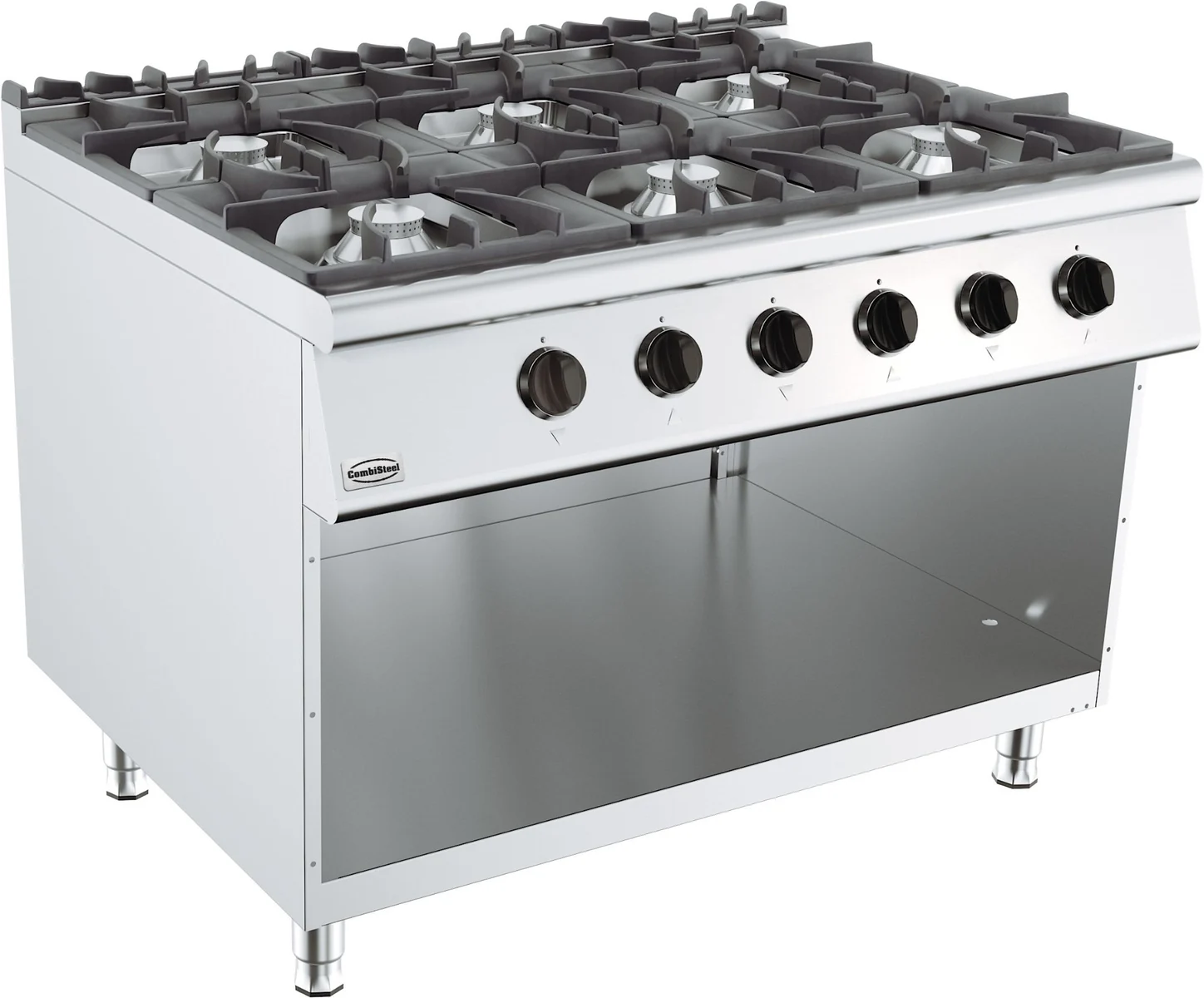
- CombiSteel Base 900 freestanding gas range 7178.3010: 6 burners, 8.5 kW per burner (listing also states total gas output: 52 kW), 900(H) × 1200(W) × 900(D) mm (Caterboss specs: 7178.3010)
- CombiSteel twin tank electric tabletop fryer 7455.1005: 2 baskets, contents frypot: 2 × 8 L, electrical power: 2 × 3.3 kW, 355(H) × 630(W) × 505(D) mm (Caterboss specs: 7455.1005)
Understanding bottlenecks in cooking lines
A bottleneck is the station that sets your send time. It hits its limit first, so other stations end up waiting before plates can leave the pass.
In an Irish service, the bottleneck is not always the section that looks busiest. It’s the station that repeatedly delays the rest of the line.
Why hobs, fryers, and griddles become the slow point
These stations are where multiple tickets converge. Chips, wings, and a breaded garnish can all land on the fryer at once. The hob might be carrying sauces, fish, and steak to the same timing.
They become bottlenecks for three practical reasons:
- Finite working space: only so many burners, baskets, or usable griddle surface.
- Recovery pressure: heavy loading drags heat out of oil, pans, or the plate.
- Hands-on time: turning, draining, batching decisions, and segregation for allergens or vegetarian lines all take labour you cannot magic away mid-rush.
What “capacity” means in service (without pretending it’s one number)
For troubleshooting, think in constraints rather than “output”:
- Parallel lanes (burners, baskets, usable griddle zones)
- Heat input (kW ratings, where you have them)
- Format and footprint (how much room you have to land, season, pack, and plate without blocking yourself)
That is why a six-burner range and a two-basket tabletop fryer can behave very differently under the same ticket pattern.
Recognising bottleneck symptoms
Look for a repeatable pattern over multiple pushes. If the same station is late across multiple busy services, you are usually dealing with a fixed station limit, or a workflow issue that consistently dumps demand onto that station.
Fryer-station symptoms (CombiSteel 7455.1005)
The CombiSteel 7455.1005 is a tabletop twin-tank fryer with 2 baskets, contents frypot: 2 × 8 L, and electrical power: 2 × 3.3 kW. Those are fixed constraints at peak.
You are likely up against fryer capacity when:
- Plates are regularly held at the pass for fried sides or starters while pan-led items are already ready.
- Both baskets are effectively “booked out” during peak, so you cannot parallelise beyond two lanes.
- One tank becomes the permanent queue because it carries the highest-demand item, while the second tank is reserved for segregation or ends up under-used.
- The section is staffed, but the fryer still forces serial batching because there are only 2 baskets.
Hob-station symptoms (CombiSteel 7178.3010)
A range becomes the limiter when chefs are queued for burner space, not when a headline kW figure “looks small”.
The CombiSteel Base 900 7178.3010 is listed with 6 burners, 8.5 kW per burner, and total gas output: 52 kW, plus a 900(H) × 1200(W) × 900(D) mm footprint. If pans are still queuing, it is often burner availability being eaten by long-occupancy pans, sequencing, or a hob section doing too much finishing for other stations.
Typical signs the hob is the constraint:
- Pans are being rotated on and off burners to make room.
- Chefs are waiting for a free burner before starting key components.
- Delays grow in step with pan-fry and sauce workload, not with fryer drops.
Griddle-station symptoms (observational, not model-specific)
This guide does not use a specific CombiSteel griddle model spec, so keep griddle troubleshooting to what you can actually see on the line.
A griddle is often the limiter when:
- You run out of clean, usable surface at peak, so items queue on the bench or get “parked” half-finished.
- The section loses timing because the griddle is doing too many jobs at once (sear, toast, reheat, finish) and there are no clear zones.
- You are waiting on landing/finishing space beside the griddle (trays, seasoning, buns, plating) as much as you are waiting on cooking.
A blunt check during the rush: Are you short of surface, or short of order in how the surface is being used? If the surface is physically full most of the time, that is a capacity problem. If there is surface free but the section is still late, look at roles, call timing, and cross-traffic.
A simple check: does the delay stick to the station when people and calls change?
You do not need stopwatches to start. You need one repeatable check.
- If the same station runs late even when you change who is on it, or you tighten the calls, you are probably looking at a hard station limit.
- If the delay moves around depending on who is working, who is plating, or how tickets are being fired, it is more likely a workflow limit.
For a broader framework on line balance, see balancing hobs, fryers, and griddles in cooking lines.
Using model specifications to diagnose the queue
Specs will not tell you “covers per hour”, but they do tell you where you have parallel lanes, where you do not, and where footprint can create hidden congestion.
Compare parallel lanes first
Using our two reference models:
- 7178.3010 range: 6 burners
- 7455.1005 fryer: 2 baskets
If your peak pattern regularly needs three or four different fried components landing together, a two-lane station is an obvious queue risk, even if the hob still has spare burners.
Use kW ratings as a clue to recovery headroom (not a promise of output)
- The 7178.3010 listing states 8.5 kW per burner, and total gas output: 52 kW. Treat that as a useful indicator of available heat at the station, not a throughput figure.
- The 7455.1005 is listed at electrical power: 2 × 3.3 kW with contents frypot: 2 × 8 L. In troubleshooting terms, it is a reminder that repeated cold loads can turn recovery into the pacing issue.
Don’t ignore footprint and the “queue beside the machine”
The spec sheet also hints at how much working room each station naturally creates:
- 7178.3010 footprint: 1200(W) × 900(D) mm
- 7455.1005 footprint: 630(W) × 505(D) mm tabletop
A compact fryer can become the bottleneck even when the tanks themselves are coping, simply because there is not enough landing, seasoning, boxing, and grab space for the way the section is being asked to work.
Strategies to relieve the bottleneck (without inventing procedures)
Start with the smallest change that reduces queuing at peak. Judge it over a few busy services, not on a quiet Tuesday.
1. Sanity-check the mismatch the specs are pointing to
If the bottleneck is on frying, the hard shape of the station is 2 baskets and 2 × 8 L frypots on the 7455.1005. You cannot make it behave like a four-lane fryer through effort alone.
If the bottleneck is on the hob, the hard shape is 6 burners on the 7178.3010. If pans are still queuing, look for long-occupancy jobs tying up burners, or the hob section being used as a finishing station for the whole line.
2. Smooth demand into the slow station instead of feeding it in a wave
If plates are regularly waiting on fried items, the practical fix is often to avoid calling all fryer work at the same moment near the end of each ticket. You are aiming for steadier demand on a station with only 2 baskets.
3. Fix congestion around compact stations
With a tabletop fryer footprint of 630(W) × 505(D) mm, a section can block itself easily. If staff are constantly reaching across baskets to season, plate, or pack, the queue may be created by layout and handoffs rather than the tanks.
4. Add capacity only after you can prove where the limit sits
If, after tightening calls and roles, the same station still dictates send times every weekend, you are in a better place to decide whether you need another lane.
Before you change equipment, sanity-check the full line. Adding a module can solve one queue and create another if it squeezes the pass or increases cross-traffic.
Example scenario analysis (hypothetical): 70–80 cover Irish bistro peak
Scenario inputs (hypothetical):
- Line equipment: 1 × CombiSteel 7178.3010 (6-burner gas range) plus 1 × CombiSteel 7455.1005 (twin-tank tabletop fryer)
- Menu profile: pan-fried mains on the range, deep-fried sides and starters on the fryer
- Service volume: 70–80 covers over a 90-minute peak
- Observed symptom: fryer checks consistently run 8–10 minutes behind dishes cooked on the range during peak
What the specs can tell you (and what they can’t)
- The range gives you six parallel burners and is listed at 8.5 kW per burner, with total gas output: 52 kW. That suggests strong parallel pan capacity on paper.
- The fryer gives you two baskets, 2 × 8 L frypots and 2 × 3.3 kW electrical power. That is a two-lane station by design.
This does not prove the range is “enough” for 70–80 covers, or that the fryer is “too small”. It does support a sensible hypothesis: if the pass is consistently waiting on fried components while the hob can still run multiple pans, the fryer station is a likely pacing point.
A practical read of the symptom
If fryer items are repeatedly 8–10 minutes behind pan-led mains, and it happens service after service, that fits a station with fewer parallel lanes. With the 7455.1005, you can only run two baskets at once. If your peak regularly demands three or more fried elements landing together, something will queue.
The next step is not automatically “replace the fryer”. First confirm whether you are genuinely maxing out both baskets, or whether the delay is coming from call timing and congestion beside a compact tabletop unit.
Next step: sanity-check your line balance
If you want a structured way to map stations, dependencies, and peak-time demand before changing equipment, use our guide on planning a commercial cooking line.