
Guides · CombiSteel Knowledge Hub
CombiSteel ENT Glasswasher and Dishwasher Installation Planning (Power, Water, Drainage)
Plan installation for CombiSteel ENT glasswasher, focusing on power, water, and drainage needs for Irish kitchens.
In this guide
If you are fitting a CombiSteel ENT undercounter glasswasher or dishwasher into an Irish bar or kitchen, installs usually fall down on the basics: electrical capacity, the right hot-water feed, or a waste point that cannot gravity drain.
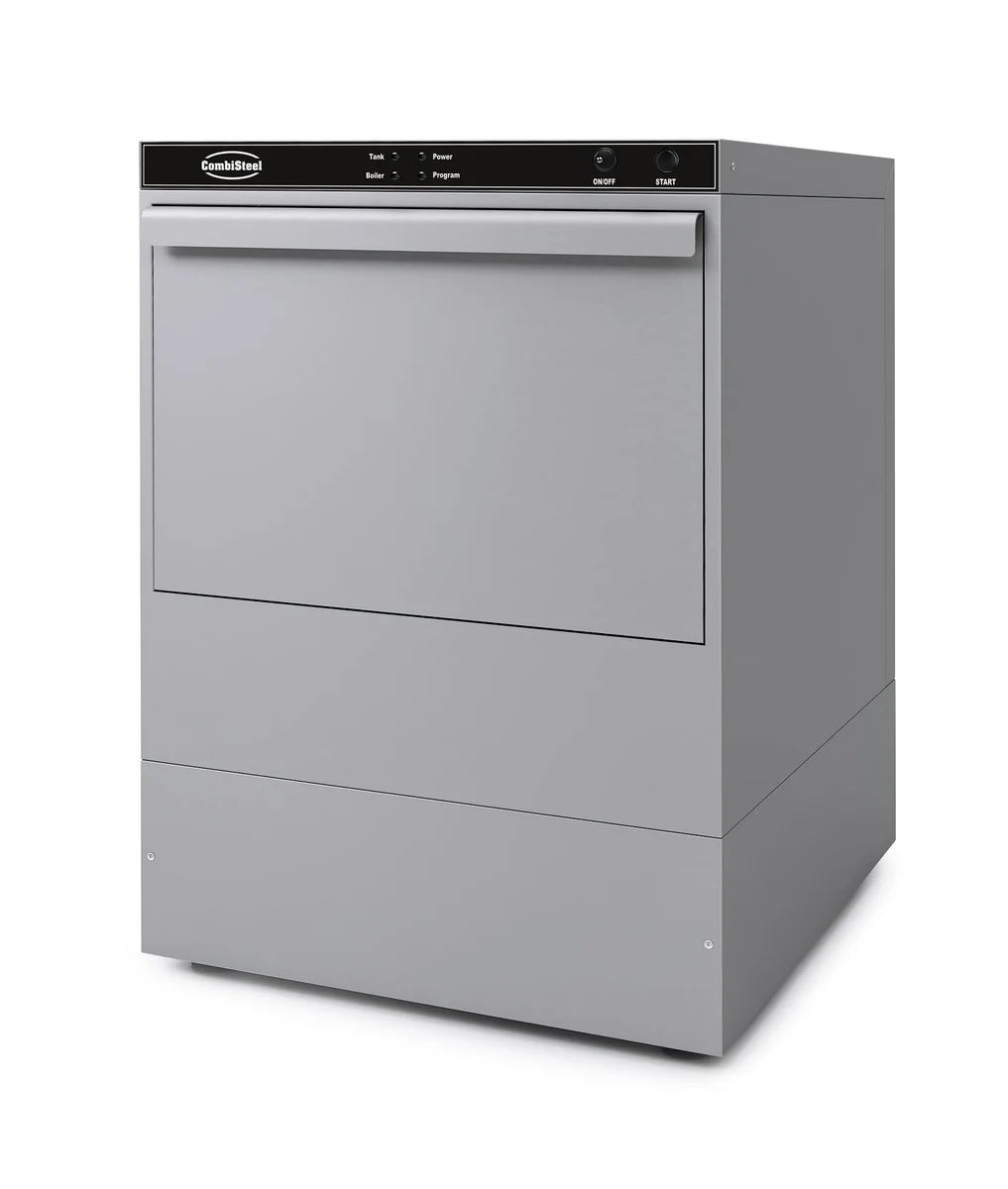
The CombiSteel Glass Washer ENT 400-230 (7082.0015) requires a 230 V, 50 Hz supply with a 2.8 kW load. The inlet is 3/4 inch, the specified incoming water temperature is 55 °C and the pressure range is 2–4 bar. The machine is listed as unsuitable for plug-and-play connection and excludes a drain pump and detergent dispenser. See the CombiSteel 7082.0015 technical data sheet, page 2 (PDF).
If you are still deciding whether a bar needs a glasswasher, a dishwasher, or both, start here before you get into services planning: glasswasher vs dishwasher for a bar setup.
Key Requirements for CombiSteel Glass Washer ENT 400-230
For Irish installation planning, the two main checks on the CombiSteel ENT 400-230 (7082.0015) are power and incoming water.
CombiSteel specifies 230 V, 50 Hz and 2.8 kW. Ask a qualified electrician to confirm the connection and circuit capacity.
The manufacturer’s 7082.0015 data sheet specifies a 3/4-inch inlet, a 55 °C water supply and 2–4 bar inlet pressure. If the measured pressure is outside that range, have the plumber resolve it before delivery.
Electrical supply (what to allow for on site)
- Supply: 230 V, 50 Hz
- Electrical power: 2.8 kW
- Plug and play (EU plug): No
Check the proposed circuit early, especially where refrigeration, coffee machines, ice machines and lighting share the same area.
Incoming water (what your plumber needs up front)
The 7082.0015 data sheet also gives the following figures:
- Water inlet: 3/4"
- Supply temperature: 55 °C
- Water pressure (min/max): 2 to 4 bar
For service planning, the listing also states 3 L per cycle and a 3.5 L boiler capacity. That is useful for a quick reality check on whether your hot water can keep up during a rush, without drifting into commissioning advice.
Don’t assume pumped waste or built-in dosing
The manufacturer lists the drain pump and detergent dispenser as excluded. Confirm compatibility, discharge limits and dosing arrangements with the installer before specifying accessories.
Planning electrical connections
Plan the electrical connection the same way you plan the rest of a commercial install: work from the exact model data, then have a qualified electrician confirm what your site can support.
1) Confirm the model’s electrical rating and whether it arrives ready to plug in
For the 7082.0015, give the electrician the 230 V, 50 Hz and 2.8 kW figures and the manufacturer’s connection instructions.
Practically, that means you should not plan this as a simple plug-in appliance. Confirm the intended connection approach in the manufacturer documentation and with your electrician, and make sure the site has appropriate isolation and capacity.
If you are looking at other CombiSteel ENT warewashing models, do not carry the 7082.0015 figures across. Use the exact SKU’s listing and manual.
2) Keep the manufacturer manual with the job pack
Beyond headline voltage and kW, your electrician and installer should work from the manufacturer documentation for the exact model. For 7082.0015, keep the manual with the site paperwork: CombiSteel 7082.0015 User/Product Manual (PDF).
3) If you are also buying a dishwasher, treat it as a separate load
Where sites get caught is not the glasswasher on its own, but the combined load when everything is on. If you are adding a commercial dishwasher elsewhere, do your sums on the exact dishwasher model you are buying, not on the glasswasher numbers above.
Ask the electrician to confirm the available phase and capacity at the proposed location before choosing other equipment for the same circuit.
4) Use category guidance as a checklist, then validate on the individual product
Record the electrical supply, water connection and waste position on the drawing you send the installer.
Water supply considerations
Plan the water feed for the ENT 400-230 (7082.0015) around three checks: the inlet size at the install point, the pressure you can achieve at that point, and whether your hot-water system can consistently supply the required temperature during busy service.
1) Confirm the inlet size at the install point
The 7082.0015 listing states a 3/4" water inlet. Make sure you have a matching feed and an accessible isolation point where the machine will sit. Specs source: CaterBoss listing for 7082.0015.
2) Check pressure at the connection point behind the bar or under the counter
This model is specified for 2 to 4 bar. Check at the actual point of connection, not just “at the front of house”, because pressure loss through older pipework and shared feeds is common. Specs
If you are outside that range, treat it as a plumbing issue to resolve before delivery and confirm any model-specific limits in the manufacturer documentation: CombiSteel 7082.0015 user/product manual PDF.
3) Make sure your hot water can hold the required temperature during peak use
Plan for a 55 °C water supply at the connection to this machine.
The sheet lists 3 litres per cycle and a 3.5-litre boiler. Use those figures alongside the expected number of cycles to discuss water supply during peak service.
Drainage options: gravity vs pump
Drainage is mainly a layout check. Get it wrong and an undercounter machine can be awkward to connect once the joinery is in.
A gravity-drain installation needs a suitable fall to the drain. If a continuous fall is impossible, check the compatible drain-pump option and permitted discharge height with the installer.
Gravity drain (what it means on site)
With gravity drain, the plumbing has to do the work. You are aiming for:
- a waste point lower than the machine outlet
- a reliable downhill run with no sections that effectively go uphill behind plinths or boxing
The base ENT 400-230 excludes a drain pump.
Drain pump (when you need it, and what to confirm)
If your only available waste point is higher than the machine’s outlet level, or the route cannot stay downhill, you are into drain-pump territory.
Two practical points:
- Decide on any pump before ordering and include the exact compatible accessory on the installer’s schedule.
- Do not guess discharge height. Confirm the permitted discharge height with your installer, as CaterBoss advises, and refer to the manufacturer documentation for the exact model: CombiSteel 7082.0015 user/product manual (PDF).
For a deeper walkthrough of the trade-offs, see drain pump vs gravity drain for dishwashers and glasswashers.
Coordinating multiple machines
If you are coordinating a bar glasswasher and a back-kitchen dishwasher, plan services as one combined job. Even when the machines are in different rooms, they often share electrical capacity and water supply.
Keep it grounded at buying stage:
- get the exact kW and voltage from each product page
- map where each machine will sit
- note where the waste points actually are, and whether they allow a fall
Record the connections for each machine separately, using the exact model number.
Confirm the available supply and heating load for each dishwasher, including other machines running during the same shift.
Worked example (hypothetical Irish site)
Scenario: An Irish bar has a 230 V single-phase supply, mains water around 3 bar, and a low-level floor gully directly behind the bar. They want to fit a CombiSteel ENT 400-230 glasswasher (SKU 7082.0015) under a 900 mm-high stainless counter. They also plan an undercounter commercial dishwasher in the back kitchen, where the only obvious waste point is a wall standpipe 300 mm above finished floor level.
Bar glasswasher position (7082.0015)
Using the model-specific listing data:
- Power check: The machine is specified at 230 V and 2.8 kW. That matches a 230 V site on paper, but you still need an electrician to confirm capacity and the correct connection method because the listing states “Plug and play (EU plug): No”.
- Water check: A measured 3 bar sits within the machine’s 2 to 4 bar range, and you will need a 55 °C supply and a 3/4" inlet at the actual install point.
- Drainage check. A low-level floor gully may allow gravity drainage. Confirm that the route falls from the outlet throughout. The base 7082.0015 excludes a drain pump.
- Fit under the counter. The nominal 900 mm counter height in this example does not give the clear opening. The data sheet gives a machine height of 709 mm. Measure below the worktop and allow for pipes, valves, access and manufacturer clearances. Check the ENT user manual (PDF) with the installer.
Back-kitchen dishwasher position (planning approach)
For the dishwasher, the key point is not to reuse glasswasher figures. Work from the exact dishwasher SKU you are buying.
- Measure the outlet and the full route to the standpipe. A standpipe 300 mm above floor level can allow or prevent gravity drainage, depending on the outlet height and hose route. Where a pump is required, ask the installer to confirm the permitted discharge height for that model.
- Ask the electrician to check the phase and simultaneous electrical demand for both proposed machines at the site.
Next step: sanity-check your services against the exact model
Before you commit, pull together:
- the exact product page for the SKU you are ordering
- the manufacturer manual PDF
- your measured water pressure at the install point
- a clear note of where the waste point is, relative to where the machine outlet will sit
Keep the data sheet and the CombiSteel ENT user manual (PDF) with the installer pack for the 7082.0015.
Give your installer the model numbers and the completed site measurements before you place the order.