
Dishwashers · CombiSteel Knowledge Hub
CombiSteel Dishwasher Capacity: Turn Peak Wash-Up Demand Into a Model Shortlist
Match your dishwasher to peak demand by converting returns into racks, then shortlist between CombiSteel 7082.0030 (500 × 500) and 7082.0025 (400 × 400) for Irish kitchens and bars.
In this guide
When you size a commercial dishwasher, the risk is rarely the spec sheet. It is running short of clean plates or glassware in the busiest 15 to 30 minutes of service.
This guide helps you:
- convert peak returns into a rack target you can plan staff and space around
- understand what the published 120‑second cycle and 30 baskets/hour do and do not tell you
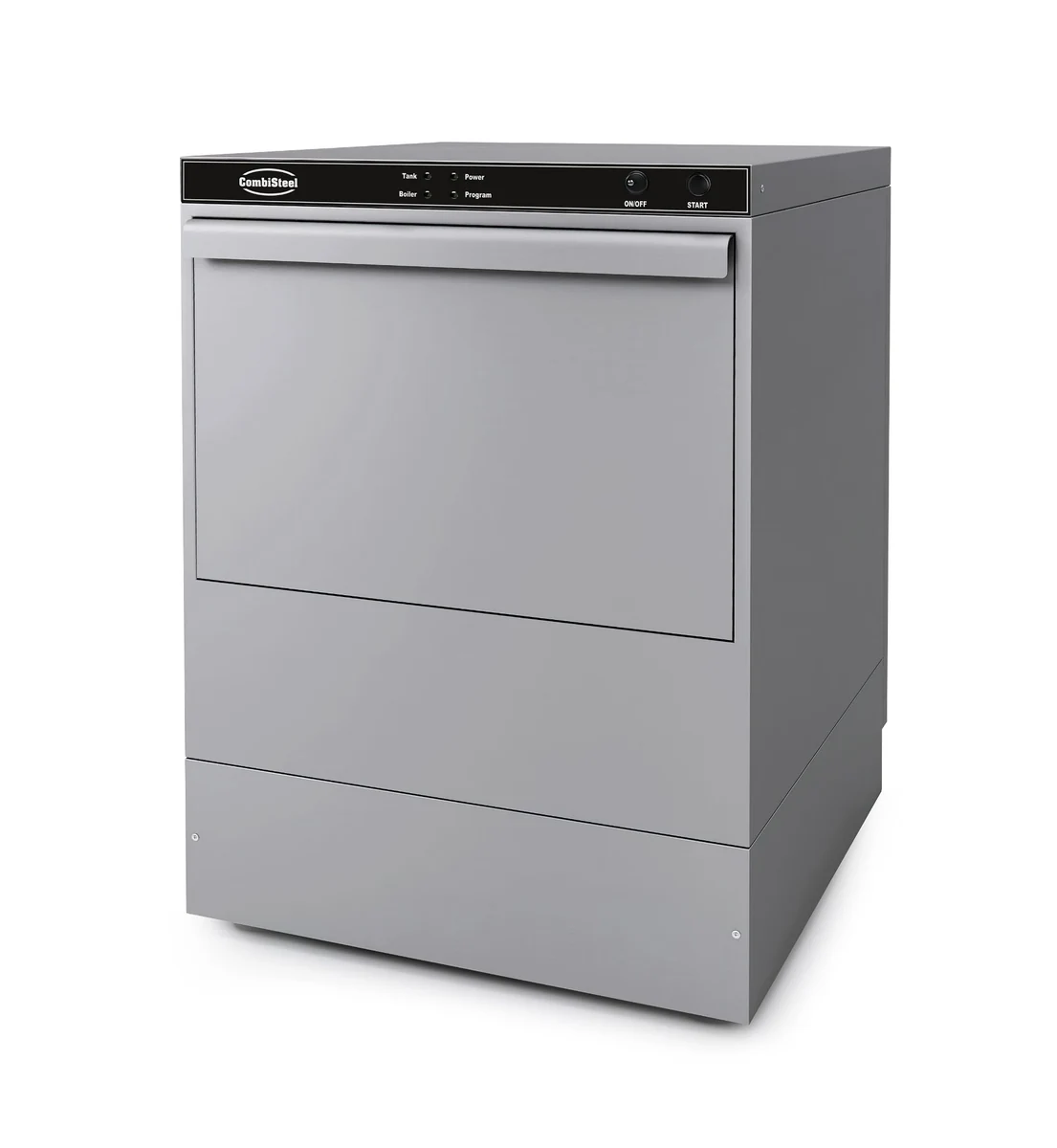
- shortlist between CombiSteel 7082.0030 (500 × 500 basket) and CombiSteel 7082.0025 (400 × 400 basket) using verified rack size, loading height, and included accessories
1) Start with what physically fits (rack size, loading height, and what is included)
Before you do any maths, confirm two basics:
- Basket (rack) standard: your existing racks and your wash-up routine need to match the basket size.
- Usable loading height: tall pint glasses, wine stems, bowls and bulky items can be the difference between a steady flow and constant re-racking.
For these two CombiSteel variants, drainage and chemical dosing can also decide it, because the technical sheets list different accessories included.
CombiSteel 7082.0030 vs 7082.0025 (verified spec snapshot)
Swipe or scroll horizontally to see all table columns.
| Model | Machine type (as specified) | Basket size | Loading height | Published cycle time | Published rate | Drain pump | Detergent dispenser | Source |
|---|---|---|---|---|---|---|---|---|
| 7082.0030 | Front-loading dishwasher | 500 × 500 mm | 342 mm | 120 sec | 30 baskets/hour | Excluded | Excluded | 7082.0030 technical data sheet (p.2) |
| 7082.0025 | Glasswasher | 400 × 400 mm | 302 mm | 120 sec | 30 baskets/hour | Included | Included | 7082.0025 technical data sheet (p.2) |
How to read this in plain terms:
- If you need a 500 × 500 rack to load plates and mixed kitchen ware without hassle, you are naturally leaning towards 7082.0030.
- If the machine is mainly for bar glass turnover and needs to sit under-counter, 400 × 400 is often the practical format, which points towards 7082.0025.
- If your drainage fall is tight (common on replacements), the fact that 7082.0025 lists a drain pump as included can matter more than the headline baskets/hour figure.
If you are deciding specifically between a glass workflow and a dish workflow behind the bar, keep it grounded in your service pattern as well as rack size. This cross-check helps: glasswasher or dishwasher for bar use.
2) Convert peak returns into rack demand (worked example)
The most useful capacity number is not “baskets per hour”. It is how many racks you must clear in your busiest window, usually 15 to 30 minutes.
Translate items into racks
Pick a real peak window and count what actually comes back.
Worked (hypothetical) example:
- 180 plates returned in 30 minutes
- a quick test load shows 18 plates per rack (your plate size and racking style decide this)
Rack demand:
180 ÷ 18 = 10 racks in 30 minutes
That 10 racks is your starting target for the wash-up area.
Add handling time (the bit that decides whether you keep up)
Both models list a 120‑second cycle on their technical data sheets, but service output includes human time around the machine.
Using the same worked example assumptions:
- 2 minutes wash time per rack (120 seconds)
- 1 minute handling per rack (scrape, rack, start, unload, stack)
Effective time required:
10 racks × (2 + 1) minutes = 30 minutes of continuous work
In other words: in that half-hour peak, you do not have much slack. If the KP is also sorting cutlery, dealing with chef whites, or running glass at the same time, you get gaps between cycles and you fall behind.
3) Published rate vs service reality (plan for the bottlenecks)
Both of these CombiSteel variants publish:
- Cycle time: 120 seconds
- Rate: 30 baskets/hour
Sources: 7082.0030 technical data sheet (p.2), 7082.0025 technical data sheet (p.2).
What that does not include:
- time to scrape and sort (especially if plates and glass are mixed)
- time lost because a rack is not ready the second the cycle ends
- slower loading when items are tight on loading height and you are forced to half-load racks
A safe planning approach is to treat the published rate as best case, then check whether your peak-rack calculation still holds once you add realistic handling time.
4) Shortlisting: which model tends to suit which job?
Use the spec snapshot table above as your anchor. Then decide based on your peak racks and how the wash-up actually runs on a busy shift.
Choose 7082.0030 (500 × 500) when
- you are plate-heavy, or washing mixed kitchen ware, and you want a rack format that loads cleanly
- you need the extra 342 mm loading height for bulkier items
- your install suits the base configuration where drain pump and detergent dispenser are listed as excluded and you are planning for that (see data sheet)
Choose 7082.0025 (400 × 400) when
- your peak is mainly glassware and you want a smaller rack that is easy to keep turning over behind the bar
- 302 mm loading height is enough for your tallest glasses and bar items
- you want the simplicity of a variant listed with drain pump and detergent dispenser included (see data sheet)
5) Drainage and dosing: decide early, not after delivery
Drainage is one of the fastest ways a “simple swap” turns into delays.
On these two variants, the technical sheets state:
- 7082.0030: accessories excluded include drain pump and detergent dispenser
- 7082.0025: accessories included include drain pump and detergent dispenser
If you are not 100% sure your site will gravity-drain cleanly, measure the waste connection height and route first, then match the variant to that reality.
A focused checklist is in our guide to choosing a CombiSteel dishwasher by drain pump vs gravity drain.
FAQs
How do I convert peak dirty plates (or covers) into a dishwasher capacity target?
Use your own peak window and a test rack:
- Pick a real peak window (often 15 to 30 minutes).
- Count what comes back in that window.
- Test-load a rack to find a realistic items per rack.
- Calculate:
peak items ÷ items per rack = racks needed in the peak window. - Stress-test that rack number by adding handling time (scrape, load, unload, stack), not just the machine cycle.
How do I decide between a 400 × 400 glasswasher and a 500 × 500 dishwasher?
Start with the job you need it to do at peak:
- Bar glass turnover with limited space tends to suit 400 × 400.
- Plates and mixed kitchen ware generally load more easily in 500 × 500.
Then check loading height and whether the variant you are pricing includes the bits your site needs, particularly a drain pump and detergent dosing.