
Refrigeration · CombiSteel Knowledge Hub
CombiSteel Ice Machine Sizing: Daily Output vs Bin Capacity (Using Model 7476.0150)
How to size a CombiSteel ice machine for Irish bars, cafés and restaurants by separating 24-hour output from bin reserve, using model 7476.0150 as the reference point.
In this guide
When you buy an ice machine for a bar, café, or restaurant, you are buying two separate limits:
- Daily output (kg/24 h): how much ice it can produce across a full day under the maker’s test conditions.
- Bin capacity (kg): how much ice you can have ready to scoop right now.
If you size off the kg/24 h figure only, you can still run short at 9pm because the rush empties the bin faster than the machine can rebuild stock.
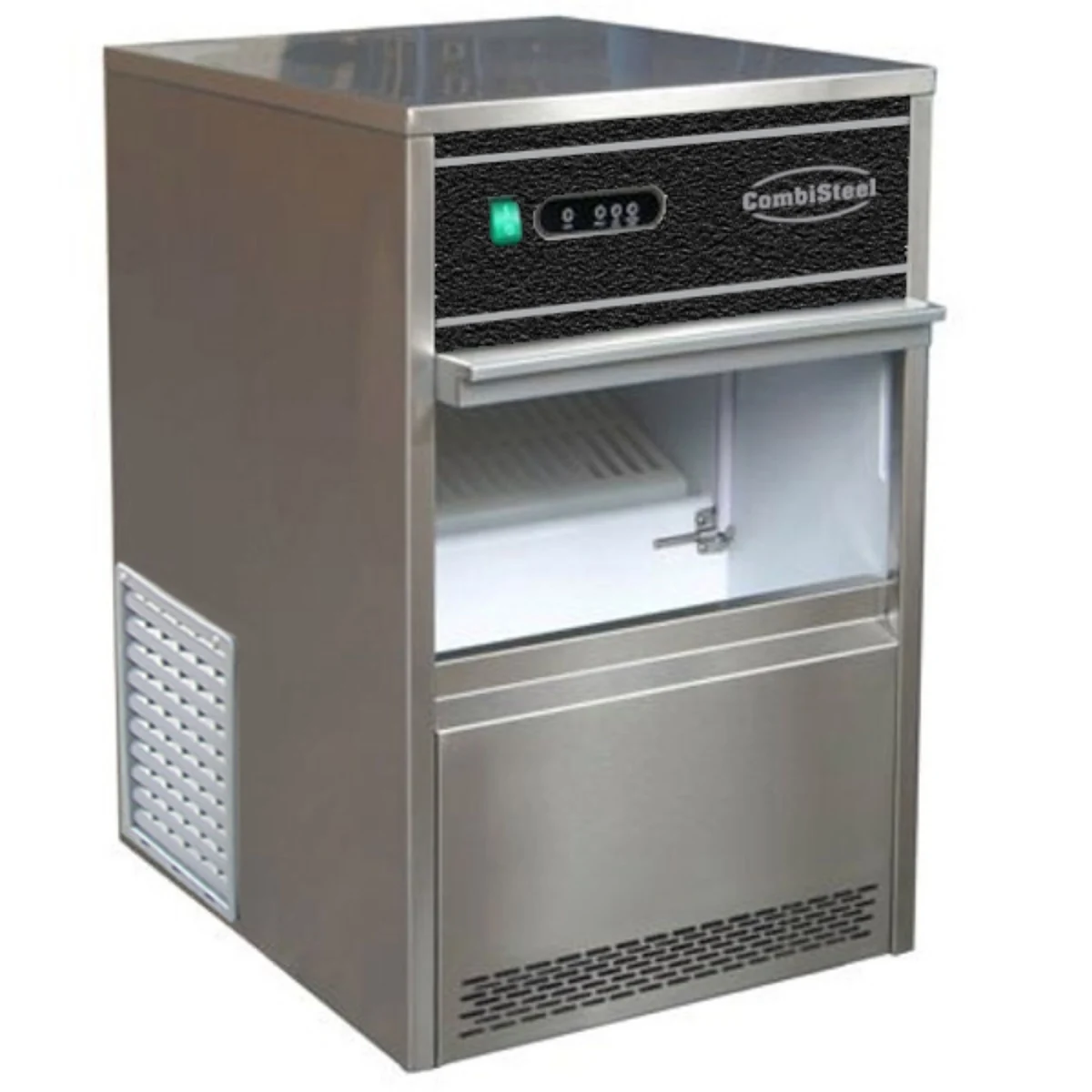
To keep this grounded, we’ll use CombiSteel 7476.0150 as the reference point. It’s listed at 26 kg/24 hours max ice production with a 6 kg bunker (bin) capacity (Caterboss product listing).
What the numbers mean in practice (7476.0150)
1) Output is a maximum, tested under set conditions
The CombiSteel manual for models 7476.0150–0155 states the production rating is “tested under the conditions of ambient temperature 15°C and tap water temperature 10°C” (p.7):
In a working bar, the room can be warmer, ventilation can be tighter, and the unit might be sitting beside heat-producing kit. Treat 26 kg/24 h as a comparison benchmark, and build in headroom if the machine will be operating away from those test conditions.
2) The bin is your peak reserve
For this model, the listed 6 kg bin is what carries you through a burst of orders. Once that reserve is gone, you’re relying on the machine’s freeze and harvest cycles to catch up.
3) You can’t stockpile past a full bin
The manual states that when the storage container is full, the “ice full” indicator lights and the ice maker stops automatically (p.6):
So your maximum “ready now” buffer inside the unit is capped by the bin. If you need a deeper reserve for peak service, you solve that with more storage (or a different service set-up), not by expecting the machine to keep producing once it’s full.
A worked sizing check for peak (hypothetical, for planning only)
This is not a performance promise. It’s a quick way to stress-test whether the bin suits your busiest spell.
Using the published figures for 7476.0150 (26 kg/24 h output, 6 kg bin):
- Assume a short spike of 100 drinks.
- Assume 0.12 kg of ice per drink (purely hypothetical).
- Peak draw = 100 × 0.12 = 12 kg.
If you start that rush with a full bin, you have 6 kg ready. Even with the machine running, you’re trying to cover a 12 kg spike with a 6 kg buffer.
Also, the “26 kg per 24 h” rating does not translate into a guaranteed straight-line kg per hour, particularly if your conditions are warmer than the manual’s 15°C air / 10°C water test.
That is how you end up with “it’s fine midweek, it struggles at the weekend” without anything actually being faulty.
A simple shift and daily demand worksheet (so you can compare properly)
If you want to know whether you are output-limited, you need a day or shift total, not just a peak-window guess.
Keep it basic and use your own numbers:
- Measure your real ice per serve (kg/drink)
- Weigh the ice used for a small sample of typical serves during set-up.
- Example only: 10 serves use 1.2 kg of ice, so 1.2 ÷ 10 = 0.12 kg per drink.
- Total your drinks using ice for the day (or the shift)
- Pull this from your POS, cocktail count, or a manual tally.
- Add other draws separately (kg/day or kg/shift)
- Staff drinks, water jugs, soft drinks, smoothie prep, bar backing, seafood display, and any second station helping itself from the same bin.
- Compare your total against the max daily output, with test conditions in mind
- For 7476.0150, the reference maximum is 26 kg/24 h under 15°C ambient / 10°C water test conditions (manual p.7).
One illustrative day total (hypothetical)
- Drinks needing ice: 300
- Ice per drink: 0.12 kg (example only)
- Drink ice total: 300 × 0.12 = 36 kg
- Other uses: 4 kg
- Total day demand: 36 + 4 = 40 kg
In that purely illustrative scenario, a machine rated at 26 kg/24 h under test conditions would be an uncomfortable fit for the day’s total demand, even before you look at peak timing and bin reserve.
How to decide whether you need more storage or more output
How you run short usually tells you what you actually need to buy.
- You run out during a short, busy window (a Friday night surge): you’re often bin-limited, especially if you started with a full bin. More storage, a second ice point, or a different service set-up is usually what removes the pinch point.
- You start fine but slowly fall behind across the shift (short near close): you’re often output-limited, or the machine is being asked to perform in tougher conditions than the rating test. Higher daily production helps, but you still plan around real site conditions.
If you are changing the bar run or adding equipment, do the basic space and access checks at the same time. The same practical planning applies as it does to refrigeration: choose a commercial refrigerator.
And if your ice pinch-point only happens when the bar is under pressure, it’s worth looking at glass turnaround and staff movement as well: CombiSteel glasswasher or dishwasher for bar.
FAQs
Can I improve availability without changing the machine?
Sometimes, but it depends on what is causing the shortfall.
If you are consistently emptying the bin despite starting service with a full reserve, that points to a sizing issue (more storage, more production, or both). If you are starting peak with a half bin, the issue is often when you are trying to build stock.
What’s the quickest way to estimate your peak requirement?
Pick one busy night and log what matters for 30 to 90 minutes:
- number of drinks needing ice (or cocktail count)
- any other uses pulling from the same bin
- whether the bin hits empty during that window
If you want that log to be comparable to machine capacity, weigh the ice for one typical serve during set-up (even a few samples helps). That gives you a real “kg per drink” number for your bar, instead of guessing.
Next step: check the reference model
If you want a clean reference point while you’re speccing, start with the published figures and the manual’s test conditions for CombiSteel 7476.0150, then work backwards from your peak reserve and day-total demand: CombiSteel ice machine 26 kg/24 h (model 7476.0150).