
Bakery · CombiSteel Knowledge Hub
Checking CombiSteel Compatibility with GN 1/1 and 600 × 400 mm Trays
Guide on using GN and 600x400 trays in CombiSteel products for Irish kitchens.
In this guide
If you buy the wrong tray standard for an oven, counter or fridge, you lose usable space and slow the whole station down. In runnered commercial equipment, “nearly fits” usually means jammed trays, bent runners, and poor airflow.
The key point is simple:
- GN 1/1 is 530 × 325 mm (W × D) (manufacturer reference: “1/1 GN, W 530 x D 325 mm”).
- 600 × 400 mm bakery trays are a different footprint.
Once you treat those as two separate systems, most compatibility problems become predictable.
GN 1/1 vs 600 × 400: what’s different (and what it affects)
Swipe or scroll horizontally to see all table columns.
| Tray standard | Footprint (W × D) | What it tends to suit | What catches people out |
|---|---|---|---|
| GN 1/1 | 530 × 325 mm (source) | General catering where pans get covered, labelled, rotated and moved between stations | It will not sit correctly on 600 × 400 runners without the unit being designed for it |
| 600 × 400 | 600 × 400 mm | Bakery style sheet-tray workflows | It is wider and deeper than GN 1/1, so it will not “nearly fit” GN runners |
This is a footprint decision first. Speed and throughput depend on your product height, batch size, door opening frequency, and how tight the pass is.
Verified CombiSteel examples (what the specs actually say)
These are real, model-specific tray/grid sizes taken from the product listings or manufacturer documents.
Swipe or scroll horizontally to see all table columns.
| CombiSteel model | Equipment type | Stated tray/grid format | What it means when you’re standardising |
|---|---|---|---|
| 7489.5520 | Counter 700 refrigerator, 2 doors / 2 drawers | Listing states “Contents of GN: 1/1”; Gross Capacity: 474 L; Dimensions: (H)850 × (W)1865 × (D)700 (source) | A verified example of a GN 1/1 counter in the range. Still check runner type and clearances for your exact pans and tray lips. |
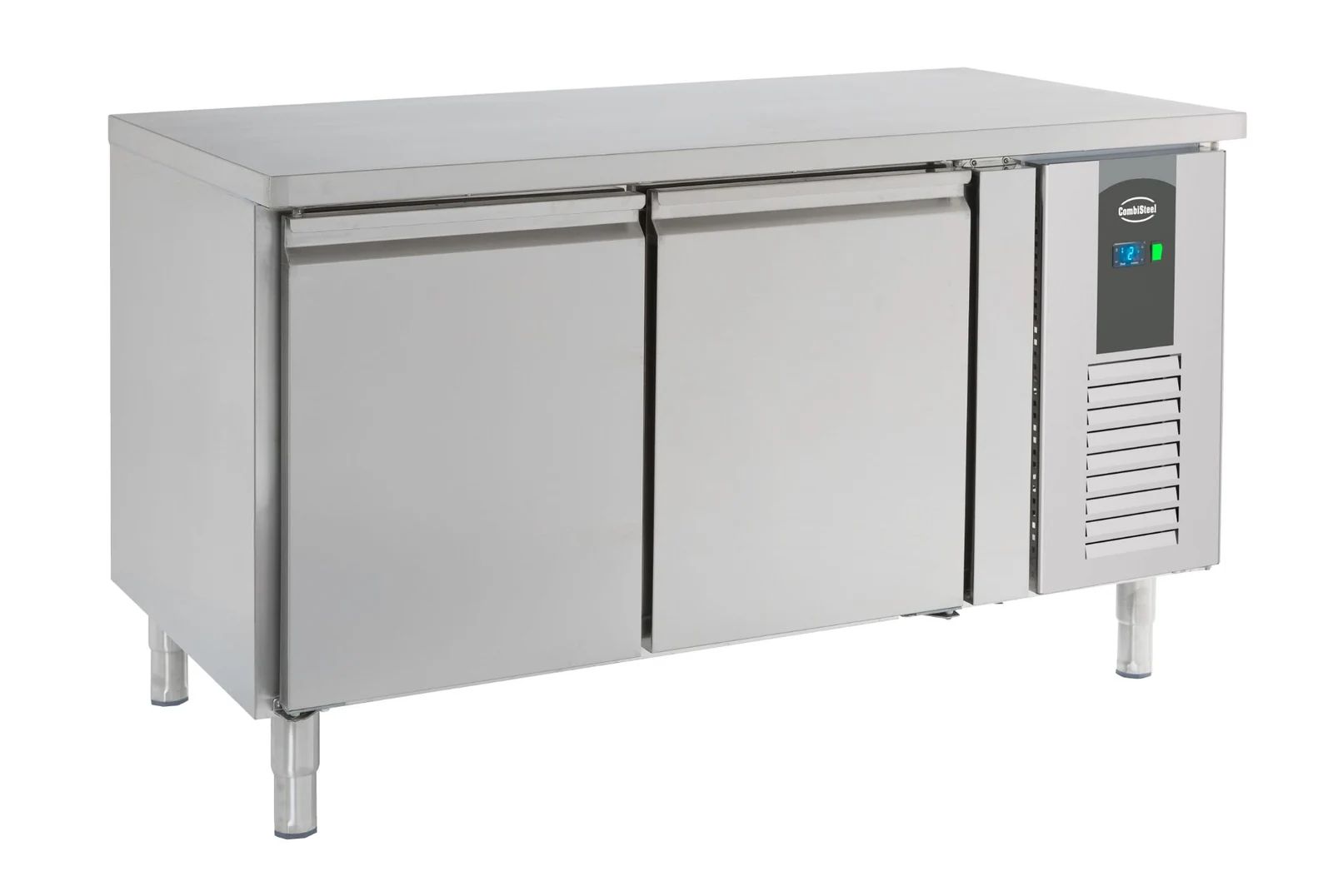
| 7450.1215 | Standard Line Refrigerated Bakery Counter, 2 doors | Grid(s) size WxD (mm): 600×400; Number of guide pairs: 12 (source) | A 600 × 400 bakery-tray counter. Guide pairs tell you runner positions, not how many fully-loaded trays you can run in real use. |
| 7500.0005 | EC1 convection oven | Grid(s) size WxD (mm): 435×315; Number of grids: 4 (source) | A compact format. If the rest of the kitchen is GN or 600×400, plan this as a separate tray pool. |
| 7543.0017 | Electric convection oven | Technical data sheet specifies 430×325 mm trays (p.1) and “3x aluminum” supplied (p.2) (source) | Also a compact format. Note the depth matches GN (325 mm) but the width does not (430 mm vs 530 mm), so it is not GN 1/1. Supplied trays and runner positions are separate facts. |
Quick compatibility check before you order (or bulk-buy trays)
- Match the footprint in millimetres (W × D), not the label. “GN compatible” is meaningless if the stated tray/grid size is different.
- Check the exact model number, then find the tray/grid line. Examples above include: 600×400 (7450.1215), 435×315 (7500.0005), 430×325 (7543.0017), GN 1/1 noted on 7489.5520.
- Treat guide pairs/grids as layout info, not a working capacity promise. Product height and airflow space can reduce what you can use day-to-day.
- Measure one real tray you already own. Include rolled edges, lips and handles. Those are usually what foul runners and door seals.
Workflow checks that matter in real kitchens
Even when the footprint matches, these are the common causes of “it fits but it’s a pain”:
- Runner style and tray edge shape: a tray that sits fine on a flat shelf can rock or snag on fixed rails.
- Door seal clearance: test with a loaded tray. Slight bowing under weight is often where sealing problems start.
- Airflow in refrigerated counters: don’t pack trays so tightly that they block circulation. Temperature recovery matters when doors are opening constantly.
Worked example (hypothetical): counting tray positions across a station
This is not manufacturer-rated capacity. It’s a simple way to sense-check how many trays you’re trying to park at once.
- Prep bench: 6 trays in active use
- Refrigerated holding: 8 trays queued in the counter/fridge
- Cooling: 4 trays waiting to cool
That’s 6 + 8 + 4 = 18 tray positions that your workflow wants at the same time.
If you’ve accidentally mixed formats, those 18 positions quickly turn into extra handling because trays can’t move cleanly between oven, counter and racking. The fix is usually to standardise by station, and accept a second tray format only where it’s a deliberate choice.
FAQs
Does 430 × 325 mm mean GN 1/1?
No. GN 1/1 is 530 × 325 mm (source). A 430 × 325 mm tray (as specified for CombiSteel 7543.0017) matches GN on depth but not on width, so don’t assume GN pans will sit correctly on the runners.
Do “guide pairs” mean trays are included?
No. Guide pairs are runner positions.
A practical example from the verified documents:
- 7450.1215 lists 12 guide pairs.
- 7543.0017 lists “3x aluminum” supplied on its technical data sheet (p.2) while the oven is described as 4-tray format elsewhere in the same spec set (source).
Always separate “positions available” from “what arrives in the box”.
What’s the most reliable way to measure a tray for fit?
Measure the outside width and depth with a tape, including:
- rolled edges or lips
- any handles
- whether the tray is bowed or reinforced
Then compare those numbers to the unit’s stated grid/tray size. If the millimetres don’t match, it’s not compatible.
Next step
If you’re standardising a bakery or bake-off workflow end-to-end, these two guides help you choose equipment around the tray format you actually want to run: