
Dishwashers · CombiSteel Knowledge Hub
CombiSteel Glasswasher vs Dishwasher: Which Belongs Behind Your Bar?
Compare CombiSteel glasswashers and dishwashers for bars. Understand basket sizes, loading heights, and included accessories to select the ideal model.
In this guide
You are choosing between two different behind-the-bar workflows: a dedicated glasswasher-style setup, or a larger front-loading dishwasher format that can take mixed items.
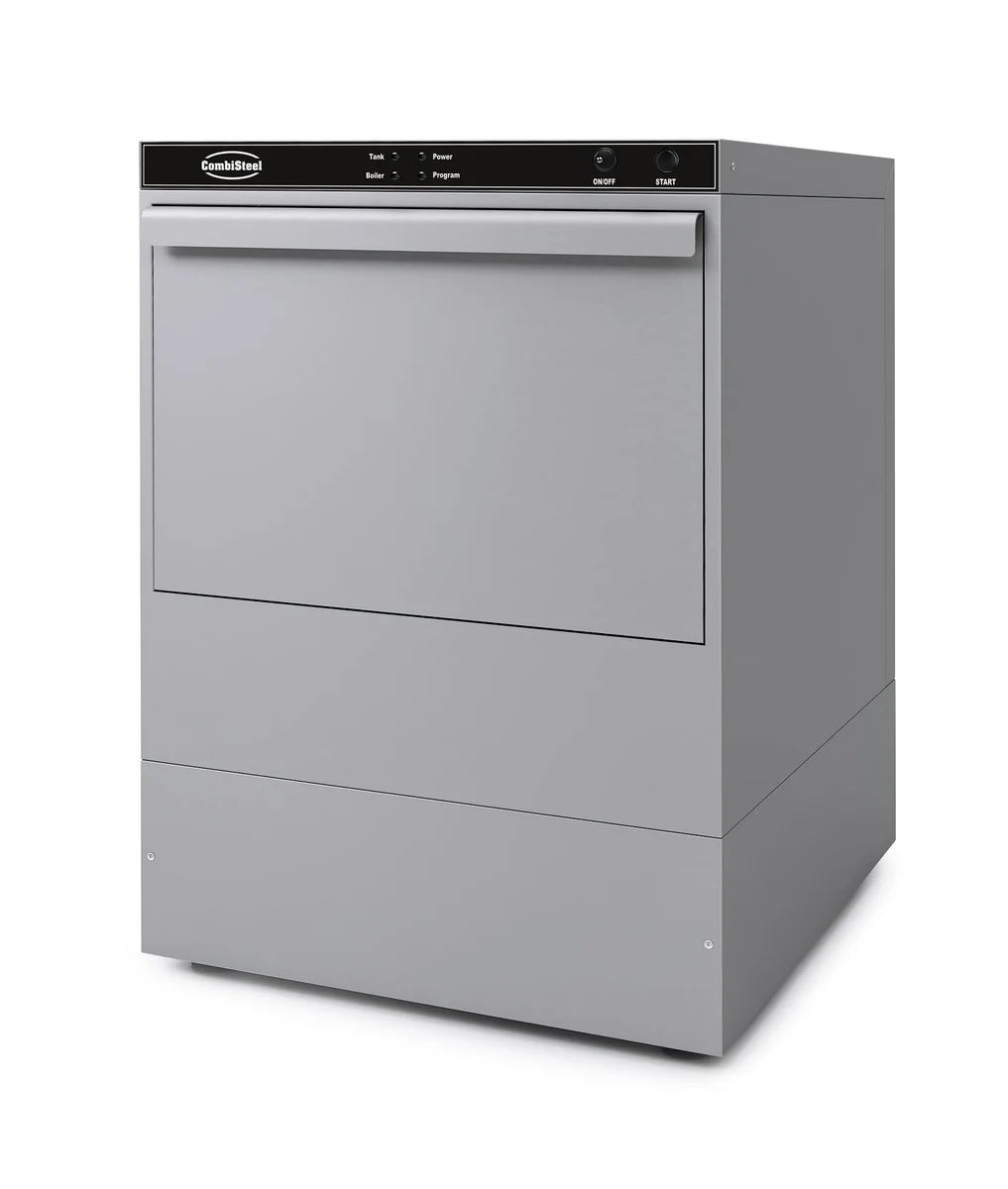
This guide compares two specific CombiSteel ENT models often shortlisted for Irish bars:
- ENT 400 230 DP DDE glasswasher (7082.0025)
- ENT 500 230 front-loader (7082.0030)
The decision usually comes down to rack format, usable opening height for your tallest glassware, and whether the base machine arrives with a drain pump and detergent dosing.
Introduction
A commercial glasswasher and a front-loading dishwasher can both work behind a bar, but they suit different service realities.
On the spec sheet, these two CombiSteel ENT models publish the same wash cycle time. That does not mean they will feel equally fast on a busy night. Throughput behind a bar is normally limited by what fits in the rack without fuss, how quickly staff can swap racks, and whether drainage and dosing are sorted from day one.
Key Differences Between the Two CombiSteel ENT Models
The verified differences below come from each model’s technical data sheet.
Swipe or scroll horizontally to see all table columns.
| Buying point that actually changes bar workflow | ENT 400 230 DP DDE (7082.0025) | ENT 500 230 (7082.0030) |
|---|---|---|
| Basket size | 400 × 400 mm (7082.0025 technical data sheet) | 500 × 500 mm (7082.0030 technical data sheet) |
| Loading height (clearance for tallest item) | 302 mm (7082.0025 technical data sheet) | 342 mm (7082.0030 technical data sheet) |
| Published wash cycle | 120 sec (30 baskets/hour) (7082.0025 technical data sheet) | 120 sec (30 baskets/hour) (7082.0030 technical data sheet) |
| Accessories in the base spec | Drain pump + detergent dispenser included (7082.0025 technical data sheet) | Drain pump + detergent dispenser excluded (7082.0030 technical data sheet) |
Why “same 120-second cycle” is not a speed advantage
Treat the 120-second published cycle as a tie-breaker you cannot use. In service, the machine that feels quicker is usually the one that:
- Takes your tallest glasses upright without angling.
- Lets staff swap racks without bumping into the dump sink, ice well, or clean-glass zone.
- Can be sited where it suits bar flow, rather than where plumbing forces it.
Glass and Rack Fit: a Worked Example (Hypothetical)
This is a deliberately simple, hypothetical fit and workflow check using the allowed inputs. It is not a manufacturer-approved loading plan.
Step 1: Height check for your tallest “everyday” glass
Assume your tallest regular glass is 320 mm overall height.
- It will not fit upright in the 302 mm loading height of 7082.0025 (ENT 400) from the technical data sheet.
- It should fit upright in the 342 mm loading height of 7082.0030 (ENT 500) from the technical data sheet.
In the real world, you also allow for how the glass sits in the rack and any insert that lifts the base. If you are close to the limit, measure a glass sitting in the rack you intend to use.
Step 2: Rack demand check at peak (simple handling math)
Using the provided example inputs:
- Peak returns: 144 glasses
- Hypothetical rack load: 16 glasses per rack
- Racks needed: 144 ÷ 16 = 9 racks
Now add time assumptions:
- Wash time (published cycle): 2 minutes per rack (120 seconds)
- Allow 1 minute per rack for a realistic swap and handling loop (open, unload, reload, start) in a working bar station
Total sequential time if one person is running it continuously:
- 9 racks × (2 min wash + 1 min exchange) = 27 minutes
That 27 minutes is a planning number, not a promise. In practice, interruptions, awkward glass shapes, and a cramped landing area are what push it out.
Impact of Model Specs on Bar Layout (What to Plan Before You Order)
Once you have the rack size and height decision made, the install either supports your workflow or fights it.
Basket handling and landing space
- 400 × 400 racks tend to suit tight back bars where the same person might be washing and serving. They are smaller to lift, and they generally need less “parking” space either side of the door.
- 500 × 500 racks make sense when you have the space to stage dirty and clean racks, or when you want the flexibility to wash more than just glassware.
A practical layout check that catches problems early:
- Can you open the door fully without clattering into a sink, undercounter fridge door, or knee space?
- Do you have a clear dirty-to-clean route so clean glass is not landing back into the splash zone?
- Is there somewhere for clean glass to drain and air off without being immediately handled?
Drainage and dosing: plan them as part of the workflow
The base spec difference matters:
- 7082.0025 lists drain pump and detergent dispenser included (7082.0025 technical data sheet).
- 7082.0030 lists drain pump and detergent dispenser excluded (7082.0030 technical data sheet).
If you are not sure whether the site can gravity drain, sort it before you choose a model. This guide walks you through the decision in plain terms: drain pump vs gravity drain for CombiSteel dishwashers.
Practical Installation Considerations (Bar-Specific)
Drain route: check it like an installer would
Before committing, confirm:
- Where the waste connection is.
- Whether the hose can run with a clean, reliable fall once the machine is pushed back into place.
- Whether the discharge needs to go up to reach a standpipe or higher waste point.
If that last point is even “maybe”, treat it as a pump conversation early.
Chemical dosing: make it repeatable
Even with a detergent dispenser in the spec, you still want a repeatable routine:
- Where chemicals are stored safely.
- How lines are routed so they are not snagged during keg changes or restocking.
- Who checks levels and who cleans filters and wash arms as part of close-down.
If dosing hardware is excluded on the base spec, allow for it up front rather than improvising during service.
Related Guides & Further Resources
- Use the commercial dishwasher capacity comparison guide to convert peak returns into rack demand you can actually staff.
- Use the drain pump vs gravity drain for CombiSteel dishwashers guide to confirm whether your waste setup suits a gravity-drain install or needs a pumped drain.
FAQs
How do I measure glass height properly for a loading-height spec?
Measure the glass as it will sit in the rack, not just standing on a shelf.
- Put the glass into the rack or insert you plan to use.
- Measure from the rack base to the highest point of the glass.
- If you are close to the machine’s loading height, allow a bit of margin for quick loading, because staff will not be babying it during a rush.
What should I budget for if I choose the 7082.0030 base variant?
Based on the 7082.0030 technical data sheet, the drain pump and detergent dispenser are excluded. In practical terms, that usually means confirming early:
- Whether you need a pump for your waste route.
- What dosing setup your chemical supplier will provide.
It is less about cost in isolation and more about avoiding a delayed install or a workaround that slows the bar down.
Can I commission the setup without guessing how it will behave at peak?
You can at least reduce surprises by doing a short, realistic shakedown:
- Run a few cycles using your actual glassware and the racks/inserts you will use.
- Check for handling issues: awkward glasses, poor landing space, staff reaching across clean areas.
- Confirm the waste connection drains reliably for your particular site setup, and that dosing is consistent.
The goal is not perfect lab conditions. It is proving the station is workable on a Saturday night.
Next step
If you are down to these two models, pull the spec sheets and compare them against your glass list, rack handling space, and waste route: