
Dishwashers · CombiSteel Knowledge Hub
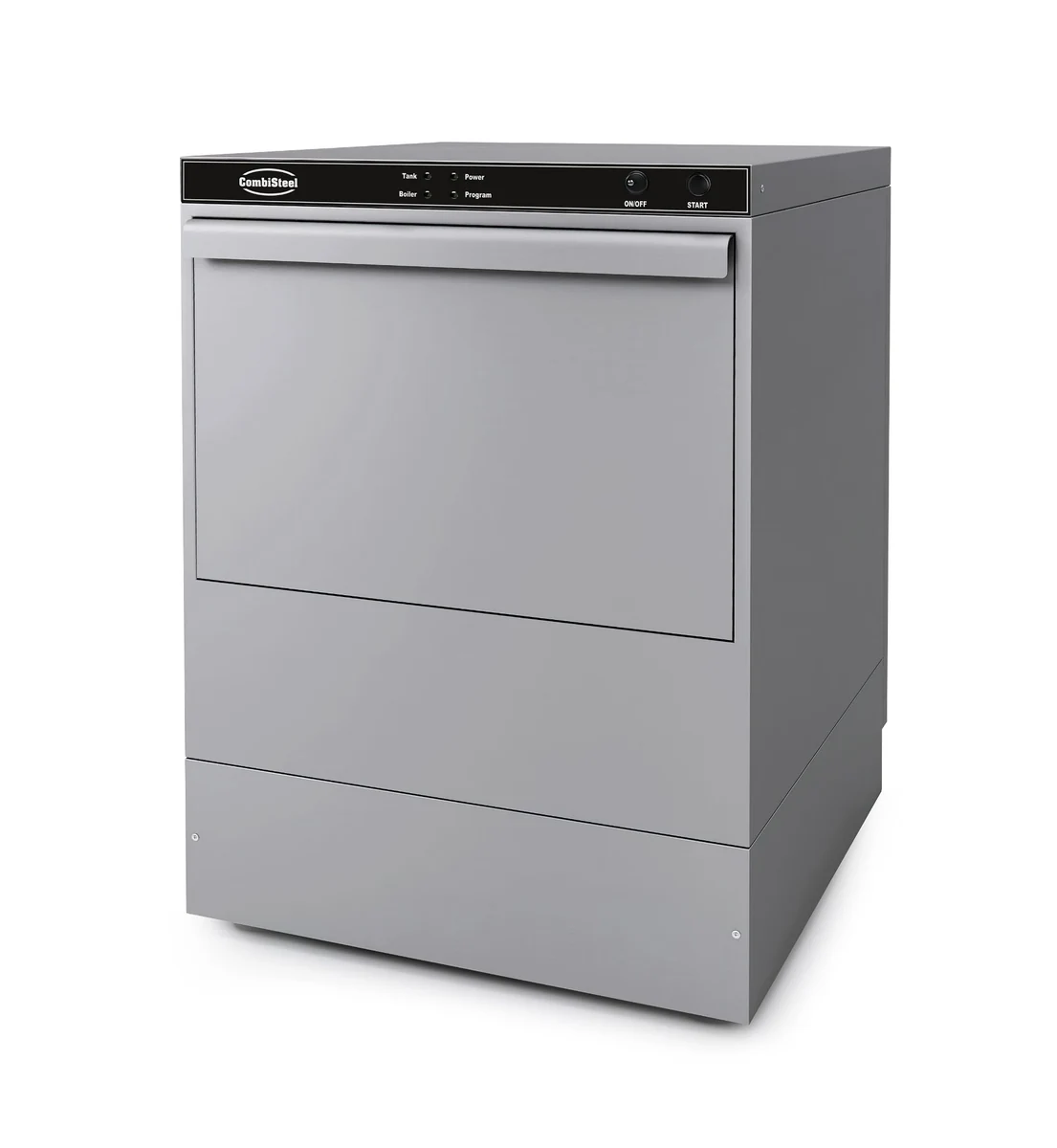
Does Your CombiSteel ENT 500-230 Dishwasher Need a Drain Pump?
Decide whether a CombiSteel dishwasher needs a drain pump based on your site waste connection, with a clear model comparison for 7082.0030 vs 7082.0050/7082.0060.
In this guide
Choosing the wrong drain type is an easy way to turn a “simple dishwasher swap” into extra plumbing work, delays, or a machine that will not empty when you need it to.
This guide helps you choose between the gravity-drain CombiSteel ENT 500-230 7082.0030 and the drain-pump variants 7082.0050 and 7082.0060, based on your actual waste connection and hose route.
Understanding drainage options (what changes on site)
The drain choice on a commercial dishwasher is about the waste connection and hose route, not wash results.
- Gravity drain relies on a continuous downhill run from the machine outlet to the waste point.
- Drain pump (DP) suits sites where the waste needs to be lifted, or where the hose run cannot keep a clean fall.
If the drainage is wrong for the site, you normally find out fast: slow or incomplete emptying, nuisance stoppages, and last-minute changes under the counter.
CombiSteel ENT 500-230 variants: what’s included (verified)
For the drainage and dosing decision, the key difference between these ENT 500-230 variants is whether a drain pump and/or detergent dispenser is supplied with the machine (as stated on the technical data sheets).
Swipe or scroll horizontally to see all table columns.
| CombiSteel model | Drain pump supplied | Detergent dispenser supplied | Evidence |
|---|---|---|---|
| 7082.0030 | No | No | “Accessories excluded Drain pump, detergent dispenser” in the 7082.0030 technical data sheet (p.2) |
| 7082.0050 | Yes | No | “Particulars: Drain pump” and “Accessories excluded detergent dispenser” in the 7082.0050 technical data sheet (p.2) |
| 7082.0060 | Yes | Yes | “Particulars: Drain pump, detergent dispenser” in the 7082.0060 technical data sheet (p.2) |
If you also need to sanity-check throughput and what “baskets per hour” means in practice for your returns, use Compare commercial dishwasher capacity alongside this drainage decision.
How to choose the right drain type (the site check that decides it)
You’re trying to answer one question:
Can the waste hose run from the dishwasher outlet to your chosen waste connection on a continuous fall, with no up-and-over sections?
If the hose has to rise at any point, gravity is no longer doing the job and a pumped model is usually the safer call.
What to check on site
- Fix the proposed machine position
A few centimetres left or right can change the hose route, especially undercounter.
- Identify the exact waste point you will connect to
Work from what’s really available, not what would be handy. Common options include:
- Sink trap spigot (often workable for gravity if it stays below the outlet)
- Standpipe or wall connection (often forces an uphill section)
- Low-level or floor waste point (often workable for gravity, depending on the route)
- Follow the full hose route with your eyes
Look for the things that quietly ruin gravity installs:
- the hose needing to go up and over a plinth or base rail
- tight bends behind the unit
- long horizontal runs with little or no fall
- Get an installer yes or no before ordering a gravity model
If you’re replacing an older unit, don’t assume the existing drain setup was right. Plenty of sites have something that half-works until service pressure exposes it.
Manual tank-emptying and draining: what we can verify
The user/product manual makes an important point that affects how you judge “drainage problems” on site: this is a tank machine that normally runs with water at a set level, and emptying the tank is a separate, deliberate step.
What we can verify from the manual excerpts is:
- On fill, the tank reaches a set level
The manual states: “The dishwasher is automatically filled with water up to the set water level.” (User/Product manual, p.9).
- The overflow hose matters to filling and normal operation
The manual also states: “Check that the overflow hose is inserted correctly in its inlet.” (p.9).
- Tank emptying is a deliberate instruction involving the overflow hose
The manual states: “Empty the washing dispenser removing the overflow hose.” (p.11).
The wording “washing dispenser” is awkward, but in context this is the manual’s instruction for emptying the wash tank by removing the overflow hose, rather than expecting the machine to be empty after each rack.
- Pump-equipped variants have a separate 2-minute draining programme (pump-equipped only)
The manual adds: “press the start button once in order to start the automatically 2 minutes draining program.” and “during the draining program the door must remain closed.” (p.11, applies only if drain pump equipped).
So, seeing water retained at the set level is not, on its own, proof of a drainage fault. The practical question is whether the machine can drain when it is meant to, given your waste connection and whether you have a pumped or gravity variant.
For exact installation limits, hose routing requirements, and the correct shutdown and emptying sequence for your model, use the manufacturer manual supplied with the unit.
Worked example (hypothetical, to show the decision)
These are made-up site situations to illustrate the hose-route check. They are not CombiSteel limits.
Example A: standpipe forces a lift (choose a pumped model)
- Proposed waste point is a standpipe.
- To reach the standpipe, the hose has to rise for part of the route.
Even if the standpipe is close by, that upward section breaks gravity drainage. In this scenario you would normally specify a drain-pump variant: 7082.0050 (drain pump, no detergent dispenser) or 7082.0060 (drain pump plus detergent dispenser), then have your installer confirm the final waste arrangement.
Example B: low waste point with continuous fall (gravity model can suit)
- Proposed waste point is low (for example, a sink trap spigot or a low-level connection).
- You can route the hose on a continuous downhill fall with no up-and-over section.
Here the gravity-drain 7082.0030 can be a sensible choice, because you are not asking the machine to lift wastewater.
Retrofit and installation considerations (where people get caught)
Don’t assume you can “add a pump later”
The data sheets are clear on what’s supplied in each variant, but they do not confirm retrofit kits or what changes would be required. Treat any “we’ll upgrade it later” plan as something to confirm with your installer or service partner before you buy.
Keep drainage and dosing as two separate decisions
Drainage and detergent dosing are different functions:
- 7082.0050 is a drain-pump model but the technical data sheet says the detergent dispenser is excluded.
- 7082.0060 includes both drain pump and detergent dispenser.
If you are choosing a model for bar use (fast turnaround, lots of glasses, tight space), workflow matters as much as the spec sheet. This is where it is worth reading Glasswasher or dishwasher for a bar? before you commit to a layout.
FAQs
What measurements should I take to decide if I need a drain pump?
Take measurements that describe your specific waste route:
- the height of the waste entry point you plan to use (standpipe rim, trap spigot, wall connection)
- whether the waste hose can run continuously downhill from the dishwasher outlet to that entry point
- an estimate of hose run length and any tight bends or pinch points
If you’re sending details to confirm, include a wide photo (machine position and waste point) and a close-up photo of the waste connection.
Does the dishwasher empty itself after every rack?
The manual describes an automatic fill to a set water level (p.9) and a separate emptying step involving the overflow hose (p.11). So it’s not a good idea to use a domestic-style “it should be empty after every cycle” rule of thumb.
If you need to confirm what should happen at the end of a programme on your exact variant, refer to the manufacturer manual supplied with that unit.
Next step: pick the variant, then confirm the site
- Choose 7082.0030 when your installer confirms a clean gravity fall to the waste point.
- Choose 7082.0050 when the waste route needs pumped discharge, and you do not need a supplied detergent dispenser.
- Choose 7082.0060 when you want both pumped discharge and a supplied detergent dispenser.
If you want to double-check you are sizing the machine correctly for your peaks as well as your drainage, use the capacity guide above before you place the order.