
Guides · CombiSteel Knowledge Hub
CombiSteel Dough Mixer Buying Guide for Bakeries
Explore the CombiSteel dough mixer essentials for Irish bakeries. Discover capacities, types, and tips for optimal bakery workflows.
In this guide
Buying a dough mixer is a throughput decision, not just a spec sheet exercise. You need a CombiSteel mixer that matches your typical batch size, your busiest service pattern, and the type of dough you run most often, from pizza and bread doughs to softer pastry mixes.
In this CombiSteel dough mixer buying guide, you work through the real choices that affect output and reliability: whether a spiral dough mixer or a planetary mixer suits your products, how to size capacity sensibly (including compact options like 8L and 10L models versus larger units), and what to check on speed options, safety features, and fixed bowl versus removable bowl designs. You also cover practical site checks before delivery (power supply, footprint, access) and the daily and weekly cleaning and maintenance habits that help minimise downtime and protect your investment. Finally, you see how to fit a mixer into a complete prep workflow alongside other bakery and pizzeria equipment so you avoid bottlenecks.
Introduction to CombiSteel Dough Mixers
CombiSteel dough mixers are commercial machines built for one job: mixing and kneading dough consistently, batch after batch. In Irish bakeries and pizzerias, that matters because the priorities are repeatable mix times, reliable gluten development, and enough recovery between batches to keep production moving.
Within the CombiSteel range you’ll mainly come across spiral dough mixers. The right choice comes down to your batch size, the type of dough you run (soft, high-hydration vs stiffer mixes), and whether the mixer is a core production machine or occasional support.
CombiSteel’s dough mixer range in Ireland (what you are actually buying into)
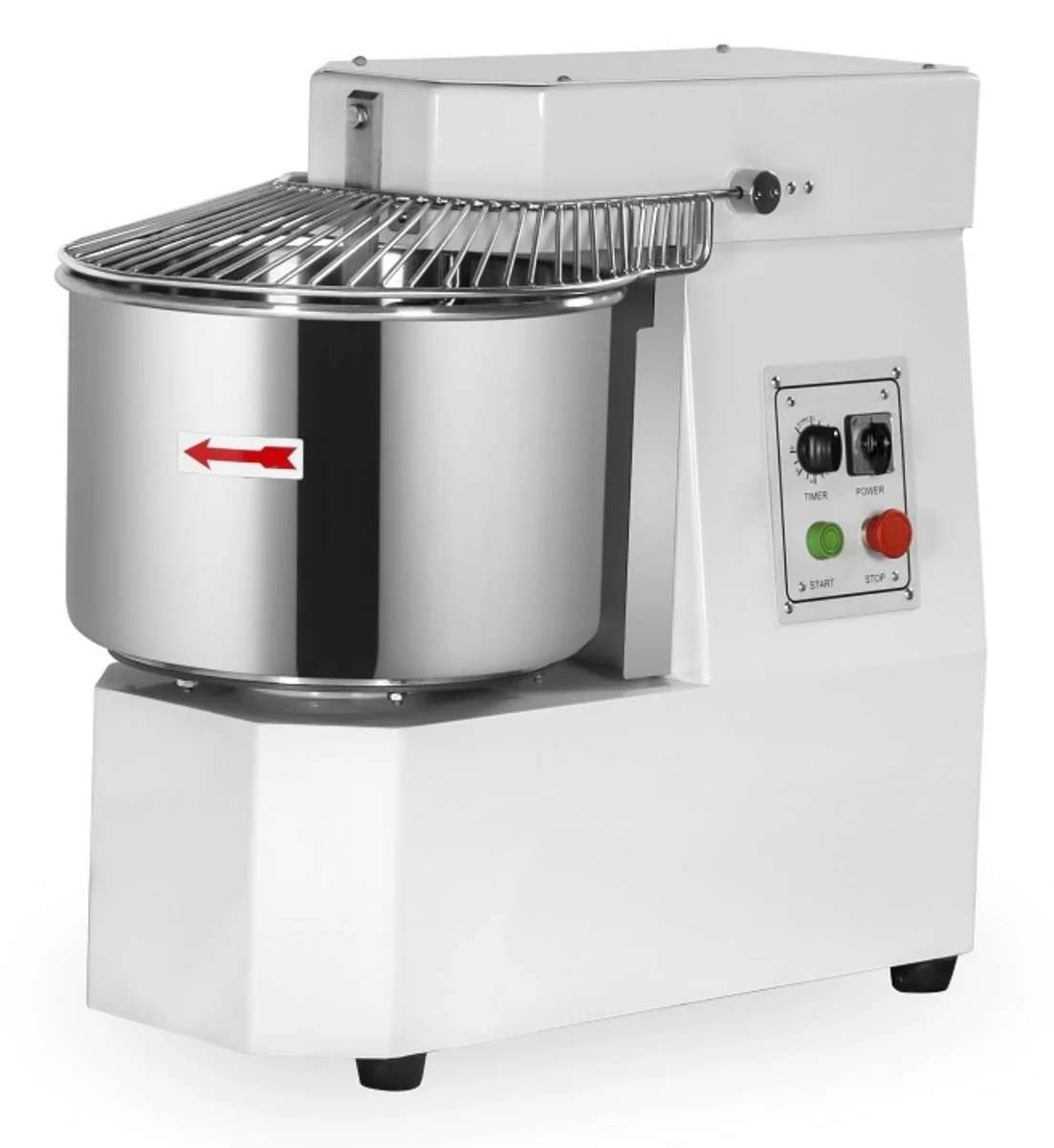
On Caterboss, CombiSteel dough mixers are listed in the spiral dough mixer category, with 8L and 10L models available.
Beyond that headline, don’t assume anything from a generic description. Before you commit, confirm the exact model’s specification and documents on the product listing, especially if you need to plan:
- Electrics (supply, plug type, and where the socket can realistically go)
- Footprint and access (bench space, door widths, and where the mixer will live day to day)
- Output expectations (whether the bowl size and dough capacity match your actual batch plan)
If it isn’t stated on the model page or in the matching manual/spec sheet, treat it as unverified.
Where CombiSteel spiral mixers fit best in real Irish venues
A spiral mixer is usually the sensible starting point when dough is a daily job, not an occasional menu extra. Typical fits include:
- Small bakeries doing morning production
- Pizzerias prepping for weekend volume
- Cafés making focaccia, buns, or traybakes in-house
- Hotels that want in-house dough without tying up staff on manual kneading
If most of your work is cream, sponge, light batters, or small-volume prep, a spiral mixer can be the wrong tool. That’s worth calling out early because it affects both workflow and how hard the machine will be pushed.
What “professional bakery-grade” needs to mean day to day
In a working kitchen, “bakery-grade” only matters if it shows up in the routine: predictable results, safe operation, and cleaning that fits your controls.
From a food safety point of view, you’re looking for equipment that supports your cleaning and monitoring as part of a HACCP-based system. The FSAI’s guidance on HACCP-based food safety management is a solid reference point for how that’s expected to work in practice: https://www.fsai.ie/business-advice/running-a-food-business/food-safety-management-system-(haccp)
You also need to treat a dough mixer as machinery, not a countertop appliance. Guarding, safe use, and staff training matter when you have rotating parts and heavy dough loads. The HSA machinery safety guidance is the right place to ground your procedures: https://www.hsa.ie/topics/machinery/
How to use this guide with the CombiSteel range
This guide is about matching CombiSteel dough mixers to your production reality: batch size, dough stiffness, mix frequency, and the constraints of a typical Irish back kitchen.
Once you’ve nailed that, the next practical decision is whether you need a spiral mixer or a planetary mixer, and what that difference means for your output and day-to-day workflow.
Key Differences Between Spiral and Planetary Mixers
Choosing between a spiral and a planetary mixer affects batch planning, dough consistency and how much hands-on time your team spends mixing and scraping bowls. The core difference is the mixing action:
- Spiral mixer: a spiral tool works the dough while the bowl rotates. It is built to knead efficiently and consistently.
- Planetary mixer: the attachment rotates on its own axis while moving around the bowl (the “planetary” motion). It is designed to handle a wider mix of tasks with different tools.
In most Irish bakery and pizza settings, spiral mixers suit dough-led prep, while planetary mixers suit mixed production where you are switching between batters, creams, fillings and the odd light dough.
How do spiral and planetary mixers compare overall?
If dough is the product, a spiral mixer behaves like a production machine. You load, mix, portion and repeat, with fewer variables from one batch to the next. That consistency matters when prep is tight, staff rotate, or you are trying to keep dough strength and handling the same every day.
A planetary mixer is more of an all-rounder. One base unit can cover a lot of jobs, but your workflow is typically more stop-start: change attachment, scrape down, swap ingredients, and move between different consistencies. That is fine when the menu is varied, but it can slow you down if you are doing dough after dough.
Spiral mixers (where they fit best)
A spiral mixer is usually the safer choice when you are mainly producing pizza dough, bread dough, rolls or other kneaded doughs. It is purpose-built for gluten development and repeatability, and it tends to cope better with back-to-back dough batches than a general-purpose mixer.
For CombiSteel buyers, CombiSteel lists dedicated dough mixers in the spiral dough mixer category, including smaller formats (for example 8L and 10L units listed for the Irish market). Those smaller machines can make sense for test doughs, lighter production and tight prep areas, but the same decision rule still applies: choose spiral for dough-first operations.
On safety, treat guarding and controls as non-negotiable. Dough mixers should prevent access to moving parts during operation, in line with Irish workplace expectations around guarding of work equipment set out by the HSA: https://www.hsa.ie/media/scpcdqdi/workequipment.pdf
Planetary mixers (where they fit best)
A planetary mixer is usually the better fit when your output is genuinely mixed. Think cafés doing batters and toppings, hotels doing pastry prep and fillings, or kitchens where the mixer is a general prep tool between services.
The practical advantage is flexibility:
- Whisk for aeration (cream, meringue, sponge mixes)
- Paddle for creaming and mixes that need more shear
- Dough hook for lighter doughs and occasional dough work
The main limitation shows up in dough-heavy operations. If you are regularly pushing stiff doughs, you can end up compensating with longer mixing times, more scraping down, and more strain on the machine than you would see with a dedicated spiral mixer.
Which is best for you?
- Choose a spiral mixer if most of your weekly prep is pizza bases, bread dough or other kneaded doughs, and you need repeatable batches under service pressure.
- Choose a planetary mixer if you need one machine to cover batters, creams, fillings and lighter doughs, and you are willing to trade some dough efficiency for versatility.
- If you do both, decide what creates the biggest prep bottleneck. That is where the wrong mixer type becomes expensive in labour time.
- When comparing small capacities (for example 8L vs 10L and up), pick the mixer type first. Capacity then becomes a scheduling question: how many batches you need per prep session, and how much slack you have if you fall behind.
Choosing the Right Dough Mixer Capacity
Choose capacity by working backwards from your busiest prep window, not your average day. Convert what you need to produce into a realistic batch plan for each dough type you run (pizza, bread, enriched dough). Then pick a bowl size that hits that peak with a sensible number of batches, without regularly running the bowl right to the limit. Finally, sanity-check the choice against space, power and workflow, because the “right” capacity on paper can still be the wrong fit on a tight Irish prep line.
1. Size for your hardest production block (not a quiet Tuesday)
Most undersizing happens because people plan around an average day. Instead, pick the single busiest block you need the mixer to cover, for example:
- pizza dough for evening service plus a top-up
- morning bake plus lunchtime rolls
Write down:
- how many units you need in that block (pizza balls, rolls, loaves)
- the portion weight you actually scale to
If portion weights vary, use the heaviest common item. It is an easy way to avoid buying too small.
2. Turn “how many units” into a batch plan you can run every week
You are not really buying litres. You are buying fewer batches, fewer changeovers, and less staff time tied up during prep.
Decide the maximum number of batches you are willing to run in the busiest window. If you are routinely doing lots of back-to-back batches to get through standard prep, you will feel it in labour, timing, and consistency, especially with staff rotation.
3. Allow headroom for the doughs that mix heavy
Heavy dough is not just “less water”. Stiff pizza dough, bagel-style dough, and lower-hydration bread dough load a mixer harder than wetter mixes. They also behave differently in the bowl, which matters when you are close to the machine’s comfortable working limit.
If you mix right at the limit day after day, the usual symptoms are:
- longer mix times
- more heat in the dough
- more strain on the machine and the person running it during multi-batch prep
If you are choosing between small sizes (for example 8L vs 10L), build in margin for your stiffest, busiest day rather than your easiest mix.
4. Use a simple worksheet, then buy the smallest size that avoids constant batching
Do this once per core dough, because pizza dough and bread dough can behave like completely different products in the same kitchen.
- Busiest prep block: (e.g. 3pm–5pm)
- Units needed in that block: (e.g. 120 pizza balls)
- Portion weight: (e.g. 260 g)
- Total dough required: units × portion weight
- Batches you can tolerate in that block: (e.g. 3 batches)
- Target dough per batch: total dough ÷ batches
- Headroom check: add margin if you do stiff dough, cold dough, or frequent back-to-back batches
If the worksheet keeps forcing “too many batches” on your busiest day, go up a size. If it only forces it for a rare outlier, it is often cheaper to plan that day differently than to overspec the mixer.
5. Sanity-check capacity against space, access, and real workflow
In Irish cafés, pizzerias and hotel kitchens, the bottleneck is often not mixing. It is where the mixer sits, how you load it, and whether you can portion and tray dough without blocking the prep table or a fridge door.
Before committing to a larger bowl, check:
- Access: will it fit through doors and around corners to the install position?
- Working space: do you have safe clearance to load ingredients and handle finished dough without awkward lifting?
- Flow: does the mixer position create a choke point between scaling, mixing, portioning, and getting dough into cold storage or proving?
Once capacity is broadly right, the next decision is usually mixer type and how it suits the mixes you run day to day.
Features to Consider: Speed, Safety, and Bowl Type
With CombiSteel spiral dough mixers, the decisions that matter in day-to-day use are straightforward: speed control (single vs multi-speed), safety interlocks around the bowl and guard, and whether a fixed or removable bowl suits how you batch, portion, and proof.
Under Irish workplace requirements, work equipment has to be safe and properly guarded. In practical terms, that means you should treat an interlocked bowl guard and a clearly accessible emergency stop as basic spec, not “nice to have”. The HSA’s guidance on guarding and safe use of work equipment is a good reference point when you’re specifying or reviewing a mixer: source document · PDF
The best choice depends on your output and staffing. A single-speed, fixed-bowl spiral mixer can be a solid fit for steady pizza prep. Multi-speed and removable bowls start to earn their keep when you are switching dough types, running back-to-back batches, and trying to keep turnaround tight without relying on heroics.
Speed options: when single-speed is enough (and when it isn’t)
If you are making one dough style most of the time, single-speed is often the easiest to standardise. There’s less scope for “fiddling”, which helps consistency when different staff are on the same prep job and your HACCP routine relies on repeatable steps.
Multi-speed is worth considering when:
- you are mixing both heavier doughs and lighter mixes on the same machine
- you want more control over gluten development without overworking the dough
- you are trying to reduce mixing time, but still keep results consistent
The trade-off is simple: extra speeds only help if you write them into the recipe and train staff to follow the same sequence every time.
Safety mechanisms: what you should not compromise on
The real-world pinch points are predictable: hands near the rotating spiral and bowl, and someone trying to scrape down “just for a second” when service pressure kicks in. You are looking for safeguards that prevent access to moving parts during operation and let the operator stop the machine immediately.
At a minimum, look for:
- a guard/bowl system that prevents mixing unless the guard is correctly in place
- a prominent, easy-to-reach emergency stop
That baseline aligns with the HSA’s expectations on guarding and safe work equipment use: source document · PDF
Also consider the space around the mixer. If it’s squeezed into a tight prep corner, you increase the chance of unsafe workarounds. Leave enough room for staff to load ingredients, observe the mix, and remove dough without reaching across a running machine.
Bowl type: fixed-bowl vs removable-bowl in real kitchens
A fixed-bowl spiral mixer suits kitchens with a predictable rhythm: mix, portion, proof, repeat. They’re typically simpler to manage day to day, and they avoid the practical headaches of storing, handling, and cleaning extra bowls.
A removable-bowl setup makes sense when downtime between batches is the problem. You can get one batch off to portioning and proofing while the next batch starts, which helps in higher-volume pizza, bakery, and prep-heavy operations.
In practice, removable bowls only work well if you have:
- safe bench or rack space to park bowls
- a clear flow so bowls aren’t carried through busy service routes
- someone responsible for cleaning and keeping the extra parts in good condition
These choices also feed into the bigger “right tool” question, especially when you are weighing a spiral mixer against a planetary mixer for different products and prep patterns.
Installation and Maintenance Tips for CombiSteel Mixers
Confirm access, power, and a safe working position before the mixer arrives. Once it is in place, level it and have the electrical connection and basic commissioning done properly. Day-to-day reliability comes down to two things: keeping flour dust and dough build-up under control, and catching early warning signs like loose guards, vibration, or drive noise before they turn into downtime.
If you cannot provide stable power, safe space to work, or time for cleaning, fix that first. Mixers usually fail for predictable reasons when they are rushed and neglected.
1. Check access, handling, and where it will live
Most “installation problems” are access problems. In Irish cafés, takeaways, and small bakery units, the pinch points are usually doors, tight turns, and thresholds, not the footprint on the spec sheet.
- Measure your narrowest door and tightest turn.
- Check floor transitions, ramps, and any step into the unit.
- Plan the working envelope: space to load ingredients, operate controls, and remove dough safely without awkward twisting.
- Plan how you will move it into position without unnecessary tilting.
If it has to pass through a production area, treat it as a manual handling risk and plan it properly. The HSA’s manual handling guidance is a solid reference point for avoiding hazardous lifting and controlling risk where you cannot avoid it: https://www.hsa.ie/eng/topics/manual_handling/
2. Confirm power supply and use a competent electrician for connection
Before delivery, identify the supply point and make sure you have a local isolator you can reach quickly in normal use. In real kitchens, that matters when you need to stop the mixer safely and you do not want staff guessing which breaker feeds what.
Any new circuit work or changes should be done by a Registered Electrical Contractor. Safe Electric outlines the role and responsibilities here: https://safeelectric.ie/contractors/
Once connected, do a commissioning check that matches your workflow:
- Start/stop operation is normal
- Emergency stop works as expected
- Guard interlocks operate correctly
- A small test batch runs smoothly before you commit a full load
3. Position it for safe use, cleaning access, and flour dust control
Set the mixer on a stable, level surface. Do not wedge it into a corner so tightly that you cannot clean around it or inspect it.
Aim for a position where you can:
- Sweep and wipe around the base without moving the machine
- Access the sides and rear for basic inspection
- Keep the area dry underfoot
Avoid placing it directly beside open flour handling if you can. Flour dust gets into everything and increases wear and cleaning time. Also try not to position it beside fryers or cooking lines where grease vapour will turn flour dust into sticky build-up that is slow to remove. Keep it away from draughty door lines if the floor regularly gets wet, as you want predictable footing and predictable electrics.
4. Clean correctly after each shift (without soaking the electrics)
Treat cleaning as two jobs: food hygiene and mechanical protection.
For food hygiene, remove dough scraps, flour paste, and dry dust before they harden. Then sanitise food-contact surfaces in line with your HACCP plan. FSAI HACCP guidance is the right baseline for what “practical and maintained” looks like in day-to-day operation: https://www.fsai.ie/business-advice/running-a-food-business/food-safety-management-system-%28haccp%29
For mechanical protection, avoid spraying water at switches, vents, or motor areas. Start with scrape-and-wipe, then use a damp cloth and suitable detergent where needed, and finish by drying. If staff get into the habit of hosing down, you will often see corrosion, sticky controls, and nuisance faults that look like “random electrical issues” but are actually cleaning damage.
5. Set a weekly and monthly routine to prevent downtime
In a busy bakery or pizzeria, preventative checks are cheaper than emergency call-outs.
Weekly:
- Check for loosened fasteners
- Confirm guards are aligned and secure
- Listen for new noise, vibration, or rough running that was not there last week
Monthly:
- Review how it is being loaded in real use, not how it is supposed to be loaded
- Watch for overfilling, stalling, or frequent stopping mid-mix to “help it along”
Those habits usually mean one of two things: the mixer is under-specified for your batch size and dough hydration, or staff have not been given a workable batch routine.
If downtime would stop service, decide your fallback now. That might mean scheduling dough production earlier to leave recovery time, or keeping a smaller secondary mixer for lighter work so the main unit is reserved for heavy doughs. This also links to mixer type, as spiral and planetary mixers behave very differently under load and punish the wrong choice in different ways.
Integrating CombiSteel Mixers with Other Bakery Equipment
Treat the mixer as the first point where your production line either flows or clogs. Faster mixing only helps if you have bench space, proofing control and oven capacity to keep up. The Health and Safety Authority’s Safe Hospitality guidance on machinery and equipment is a useful reminder for Irish operators: guarding, safe access and safe use need to be designed into the layout from day one.
How you integrate the mixer depends on what you’re producing. Small-batch artisan work is usually limited by bench workflow and dough handling. High-volume pizza and bread is more often limited by batch timing, proofing space and bake windows.
Build a simple “mix to bake” line that reduces handling and waiting
Poor placement adds labour and knocks dough temperature around from extra handling. Aim for a straight-line flow:
ingredients storage and weighing → mixer → rest → scaling and shaping → proofing → bake → cool → pack
CombiSteel’s smaller dough mixers (for example, compact spiral mixer sizes commonly sold into Ireland through Caterboss) tend to suit sites doing frequent batches in tight spaces. The integration point stays the same either way: keep the distance between the mixer, the bench and proofing as short as you can. Carrying heavy dough across a busy kitchen is slow at the best of times and risky during service.
Pair the mixer with the right prep and weighing setup (this is where consistency comes from)
A mixer won’t rescue inconsistent scaling. Put it beside a stable stainless prep table with clear bench space for:
- weighing and loading ingredients cleanly
- scraping down and checking dough without blocking walkways
- tipping or portioning dough without twisting around staff or open doors
If you run multiple doughs in a day, plan for labelled ingredient tubs and a contained “dirty zone” for empty bags and flour dust. It keeps the shaping area cleaner and speeds up changeovers.
Coordinate mixing with refrigeration and fermentation control
Irish back-of-house spaces can vary a lot in temperature, and dough will show it. The practical question is what happens immediately after mixing:
- controlled prove/retard: you need the space and access to get trays in and out quickly
- room-temperature rest: you need covered resting space that does not clash with prep and service routes
If you’re currently relying on “whatever shelf is free in the fridge”, a mixer upgrade can simply move the bottleneck to: where do I safely hold multiple trays of dough without getting in everyone’s way?
Match mixer output to dividing, rolling and shaping equipment
If you’re hand-balling pizza dough, the limiter is usually bench time and staff rhythm, not the mix cycle. If you use a roller, divider or moulder, your batch size needs to match the pace of that downstream kit. Otherwise dough sits too long while you catch up.
In many cafés and small pizzerias, smaller spiral mixer batches can integrate better with one-person shaping: steady output, less bench congestion, fewer “all at once” headaches.
Don’t ignore oven capacity and bake schedule (most mixer upgrades stumble here)
Mixing more dough is pointless if you can’t bake more product in the same window. Before choosing a mixer size, sanity-check:
- how many oven loads you can realistically bake per shift
- cooling space and time (hot product needs room and airflow)
- where shaped dough sits safely between make-up and bake
In hotels and lunch-led cafés, the oven is often shared with other menu items. Bigger batches can make production harder unless you can ring-fence oven time and holding space.
Cleaning and daily hygiene has to fit your warewashing reality
Mixers live in flour dust and sticky dough. Your cleaning routine has to be quick and repeatable, and it has to suit the sinks, drying space and time you actually have. The FSAI’s safe food handling guidance is a useful Irish reference for a clean–rinse–disinfect–rinse–air dry approach on food-contact surfaces.
From an integration point of view, plan where bowls, tools and removable parts will be washed and dried. Leaving them on a crowded bench slows changeovers and increases the risk of cross-contact, particularly if you handle allergens or enriched doughs.
Installation and safety checks that affect where the mixer can actually go
Even a “small” mixer is still work equipment. It needs safe access, stable footing and enough room to operate without anyone reaching across moving parts. The HSA guidance also flags basic expectations around guarding and safe condition of machinery, including that dangerous parts should be guarded and that guards should be cleanable in normal use (Safe Hospitality machinery and equipment guidance).
In a typical Irish fit-out, the deciding constraints are often simple but non-negotiable:
- will it fit through doorways and around corners on delivery
- can it sit level without rocking (especially on older floors)
- is the power supply where you need it, without trailing leads across wet areas
- Quick integration check: map your process in batches per day, then place the mixer so one person can go from weighing to mixing to portioning without crossing the hot line, the dishwash area, or customer-facing routes.
Once the mixer is placed properly in your workflow, the choice between spiral and planetary designs is usually clearer. It comes down to what you mix, and how that mix needs to move through the rest of your equipment.
FAQs: CombiSteel dough mixer buying questions
What are the pros and cons of fixed-bowl versus removable-bowl dough mixers?
Fixed-bowl mixers are usually the most straightforward option for small kitchens and single-product workflows. They tend to be simpler to clean around the drive system, there is less handling of heavy bowls, and there is less that can go out of alignment over time.
Removable-bowl mixers are best when you want to scale output without stopping the mixer. You can swap bowls between batches, move dough straight to bench or retarder, and keep production flowing during busy prep. The trade-offs are extra floor space for bowl handling and storage, and you will typically want at least one spare bowl to make the removable-bowl advantage worthwhile.
Practical rule: if you make a few batches per day and space is tight, fixed bowl is often the most efficient. If you batch continuously (pizza service, high-volume bread runs) and want faster changeovers, removable bowl can pay back quickly.
How many dough balls can I produce per batch with a given mixer size?
It depends on (1) the mixer’s rated dough capacity, (2) your dough ball weight, and (3) how hard you push the batch size.
Use this quick method:
- Start with the mixer’s maximum dough capacity from the product spec.
- For consistent gluten development and lower strain, plan to run at about 60% to 80% of max for most day-to-day production, especially with stiff dough.
- Divide usable dough weight by your target dough ball weight.
Example: if your usable dough per batch is 8 kg and you portion 250 g balls, you will get 8,000 ÷ 250 = 32 dough balls.
If you are choosing between sizes, work backwards from your service: dough balls per service × ball weight = total dough needed, then decide how many batches you want to run and choose a mixer that hits that batch size comfortably rather than at the limit.
What safety features should a commercial dough mixer have?
For commercial use, prioritise mixers with safety features that protect staff and reduce downtime:
- Bowl guard with safety interlock so the mixer cannot run when the guard is open.
- Emergency stop that is easy to reach from the operator position.
- No-volt release (restart protection) so the mixer does not automatically restart after a power cut.
- Motor overload or thermal protection to help prevent damage if the dough is too stiff or the batch is overloaded.
- Stable base and non-slip feet to reduce movement and vibration during heavy kneading.
If you will have multiple staff using the machine, add a simple internal SOP: never scrape the bowl while running, keep hands and tools clear of the spiral and breaker bar, and isolate power before cleaning or removing guards.
Next step: match a mixer to your batch size
If you already know the dough weights and how many batches you want to run per day, the fastest way to narrow your options is to compare bowl sizes and formats side by side.
Browse Caterboss’s Spiral Dough Mixers category to view the current CombiSteel dough mixer range available in Ireland and select the best fit for your production flow.